newmooreheading1.jpg

Home | News | Bio | Photos | Interviews | Discography | Fan Stuff | Forum

Early Days

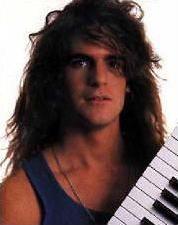
Kevin Moore was born on May 26, 1967, in Kings Park, a suburb of Long Island, New York. 
He started learning the piano at the age of five and wrote his first song by the age of 12. 
As a teen, Moore played with two short-lived bands Crystalbeast and Sidewinder
before joining his childhood friend John Petrucci in a band called Centurion.   
 
After graduating high school in 1985, Moore enrolled at SUNY Fredonia in upstate New York
to study classical music.  Following their first semesters of college, the guitar-shredding Petrucci
approached Moore to join his new band, Majesty  which later became known as Dream Theater 
with bassist John Myung.  Petrucci and Myung had already recruited fellow Long Islander Mike
Portnoy to play drums during their short enrollment at Berklee College of Music in Boston.
 
Moore played with the band during Christmas break and left college to concentrate on the group
fulltime that summer, adding keyboard parts to songs that had already been written by the band. 
After adding former Franke and the Knockouts member Charlie Dominici as the band's vocalist
and playing shows around New York, Dream Theater was signed by Mechanic Records in 1988
For additional income, Moore gave private music theory lessons out of his parents' basement.
_

Dream Theater

Dream Theater's debut studio album was 1989's When Dream and Day Unite, which would earn
the group comparisons to well-known progressive rock bands such as Rush and Queensrÿche.
Unfortunately, Mechanic was unable to fulfill many of the financial promises they had made to
Dream Theater prior to signing their contract, so the promotional tour for the album consisted
of just five concerts.  After the fourth show, Dominici was fired due to creative differences. 
It would be another two years before Dream Theater selected a replacement vocalist.
 
In its search for a singer, Dream Theater auditioned over 200 people before settling on James LaBrie
of the Canadian glam metal band, Winter Rose.  After signing a seven-album deal with ATCO Records,
a division of Elektra Records, the band's breakthrough came in 1992 with the album, Images and Words
It featured the band's highest-charting single to date, "Pull Me Under," which included lyrics by Moore and
reached #10 on the Billboard Mainstream Rock Tracks chart.  A video for the song saw heavy rotation on
MTV, and the record ultimately earned gold record certification in the U.S. and platinum status in Japan.
 
In 1994, the band released its third studio album, Awake, which was its highest-charting album with Moore,
peaking at #32 on the Billboard charts.  The album has been viewed by some as Dream Theater's darkest
work mainly due to lyrical content with many of the songs dealing with internal conflicts.  It also contained
Moore's signature song, a haunting piano-driven ballad called "Space-Dye Vest," which describes a
heartbroken man flipping through a magazine and falling in love with a stranger modeling a vest. 
The song is one of only two Dream Theater songs to never be performed live by the band.
 
Shortly before Awake was mixed, Moore announced that he wished to concentrate entirely on his own
musical interests and would be quitting Dream Theater.  In a press release on Aug. 22, 1994, he stated:
"It came to a point where my [songwriting] views were so different from the rest of the band that we were
having trouble relating to each other's ideas.  At the same time, I was finding a great deal of fulfillment
writing and recording my own material.  Eventually, this became more important to me than anything." 
Although Dream Theater has since invited him to perform with them in various reunion shows,
Moore has said that he prefers to move forward in his career as opposed to looking back.
_

Chroma Key

After leaving Dream Theater, Moore relocated to New Mexico and started writing songs for a solo album. 
His first project was a demo cassette called Music Meant To Be Heard, which included songs featuring
spoken-word samples from interviews that he recorded with strangers during his cross-country travels. 
Most of these songs were later released in 1999 on a limited-edition CD called This Is A Recording
During these demo days, Moore also contributed keyboard parts to progressive metal band Fates
Warning's 1997 album, A Pleasant Shade of Gray, and later on their 2000 album, Disconnected.
 
In 1998, Moore released his first solo album, Dead Air For Radios, under the name Chroma Key on
his self-created record label, Fight Evil Records.  Drummer Mark Zonder and bassist Joey Vera of
Fates Warning served as his support musicians for the record.  The album featured a dark ambient
sound, closer to Peter Gabriel and Tori Amos than the complex and intricate Dream Theater style. 
In hindsight, Dream Theater fans noticed that Moore had subtly explored the style of composition
in "Space-Dye Vest."  The debut album has since sold approximately 10,000 copies worldwide.
 
In 2000, Moore moved to Los Angeles, where he recorded the digitally-themed album, You Go Now
The lineup for that record was Moore, David Iscove playing guitars, and Steve Tushar on loops and programming.  During his westcoast stay, Moore briefly attended California Institute of the Arts,
where he filmed a humorous documentary entitled "Octember Revolution," which depicted a
Southern California gated-community intervention.  He then moved to Costa Rica, where he
appeared on Radio For Peace International, producing a bi-weekly activist radio program. 
Some of his work there was later released in the Internet-only album, Memory Hole 1.
 
In 2004, Moore approached his third Chroma Key album by scouring public domain films looking for one that exuded a certain mood, intending to write a pseudo-soundtrack to it.  The film he chose was "Age 13," an educational film from the 1950s, originally for use in public schools.  He took the existing film, slowed
it to half speed, and let it dictate the moods, textures and running times of the songs that he composed. 
The resulting album, Graveyard Mountain Home, included a DVD of the movie set to Moore's music.
_

OSI

In 2003, Fates Warning guitarist Jim Matheos asked Moore to collaborate with him on a new project
involving Dream Theater drummer Mike Portnoy and Pain of Salvation frontman Daniel Gildenlöw. 
The band that was formed was OSI, named for the short-lived government agency Office of Strategic Influence.  Musically, it can be described as a mixture of Chroma Key's dark, melodic focus with the guitars and heaviness of Fates Warning and Dream Theater.  Since Moore and Gildenlöw had taken
Matheos' demo ideas in different directions, Matheos ultimately tapped Moore to assume vocal duties
on the album, Office of Strategic Influence, and Gildenlöw was dropped from the OSI project altogether.
 
In April 2006, Moore and Matheos released a second OSI album called Free.  The album once again featured Portnoy on drums although this time solely as a session player as well as Joey Vera of Fates Warning playing the bass parts.  Shortly after the album's release, OSI also released an EP, re:free, which included remixes of three Free songs and a video of the album's title track.  In the spring of 2006, Moore and Matheos hinted in various interviews to possible tourdates in the support of the album, but nothing 
ultimately materialized.  This band has since said that OSI would most likely remain a studio project.
 
In April 2009, OSI released their third studio album, Blood, which featured Porcupine Tree drummer
Gavin Harrison taking the place of Portnoy.  Mikael Åkerfeldt of the band Opeth also appeared as a
guest vocalist on one the tracks, while Tim Bowness of No-Man contributed vocals to a bonus track. 
To record the album, Matheos emailed ideas to Moore, who said he "chopped them up" and added effects.  In promotion of the album, the band's website said that "Blood is totally their best album."
_

Film Soundtracks

Shortly after the release of the first OSI album, Moore relocated to Istanbul, Turkey, and composed the
soundtrack to the horror film, "Okul (The School)," which was subsequently released as a solo record
titled Ghost Book in 2004.  When the directors, the Taylan Brothers, were searching for a musician
to score their movie they learned that Moore was in Istanbul.  By coincidence, the film was based
on a book called "Hayalet Kitap," which contains a reference to the song, "Space Dye-Vest." 
The author, Dogu Yucel, is also a self-proclaimed Dream Theater and Kevin Moore fan.
 
In 2006, Moore once again teamed up with Turkish producers for another soundtrack project.
The film, "Küçük Kiyamet (The Little Apocalypse)," tells the horrific tale of a Turkish family torn
apart by an earthquake.  It was based on a short story written by the Taylans with the script being
written by Yucel.  The film earned critical acclaim from Turkish critics, many of whom listed it as
one of the best of 2006.  Moore's score, meanwhile, was nominated for a SIYAD Movie Award.
 
In March 2007, Moore performed a small show at Balo Stage in Istanbul.  It was the first time he played
Chroma Key and OSI material for fans and was described as a try-out to "play some songs for a local
crowd."  During an interview with MTV Turkey at the concert, Moore announced plans to produce the
debut album of Turkish industrial rock band Makine.  The album was later released in early 2010.
 
In September 2010, Moore announced a funding project to manufacture and release the soundtrack 
he created for "Kucuk Kiyamet."  If funding reached $3,000, the album entitled "Shine" would be
released this fall along with t-shirts and postersFans exceeded the $3,000 mark within 24 hours.

newmooreatoriumfooter1.jpg

The Mooreatorium is an unofficial online community for fans of keyboardist Kevin Moore.
 © 2010 Michael R. Ebert. All rights reserved. Last updated: Sept. 8, 2010.